
If you could meet a historical figure, who would it be and why?
The sliding glass door of the cabinet opened and a hand made its way inside. Arush picked out the old framed photo of his grandmother holding him as an infant. Such are the remnants of the days past, they always have a story which is very less complex and so full of light and positivity.
Arush used a partially wet dusting cloth to clean the frame and then kept it back into the cabinet. Besides the photo was kept a wooden aircraft, on a wooden stand. It had a propeller on its nose, a lean long body and long wingspan. It had been painted navy blue with strips of silver at several places.
The plane was made by Mr Dharker, a history professor in one of the town’s universities. He had become a form of historical figure in the area himself.
Mr Dharker had come from a far away state to the small town where he had found a job as a history professor. The university was and still continues to be one of the most prestigious in the country. The area in which he later bought his house was still going through its share of transition to the thoughts of open world, the old rigid ways were still in the process of melting down and Mr Dharker speeded up this transition.
The conversations that people had with him forced them to think beyond the common mentality which existed in the area. Initially, to the people he was like an outsider who was here to ruin the thoughts and culture. But, as it is always, people somewhere in their hearts and minds seek more knowledge and wisdom, and understanding of the world with the hope of a life with the least number of complexities.
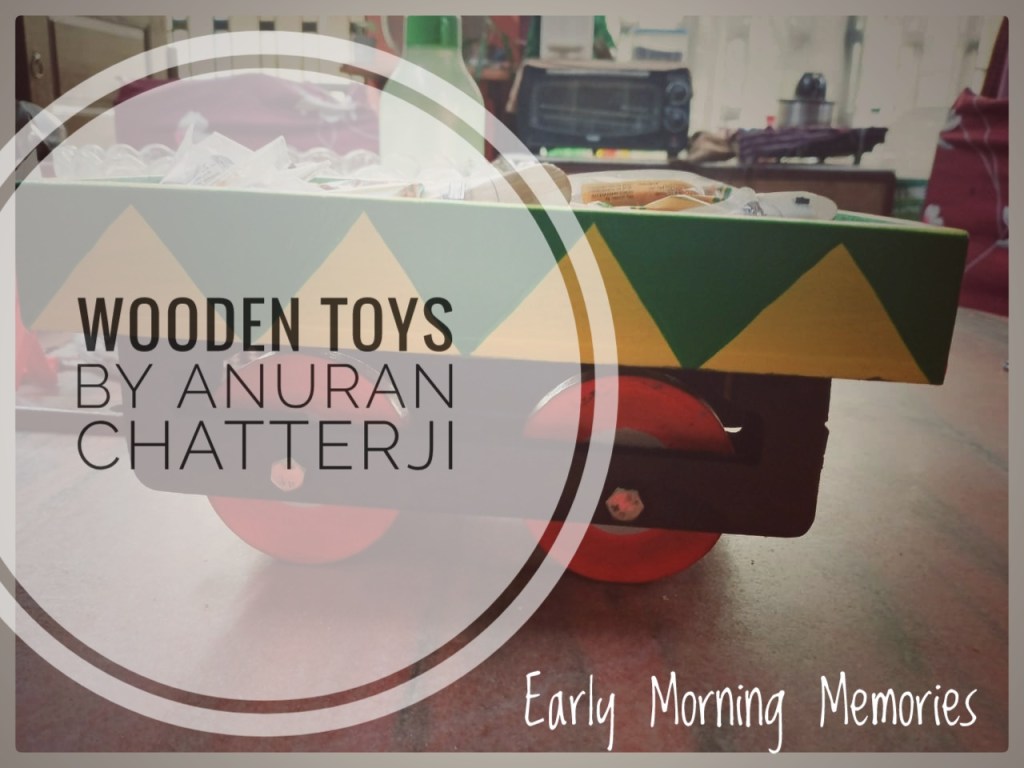
Mr Dhaker had a hobby, which can be considered unique by the present scenario of the world but there was a time when various forms of arts were very commonly practised in households. Mr Dhaker loved to make wooden toys; his house was full of them. Animals, people, cars, ships, planes and what not. There was even a small village setup he had made entirely out of wood.
Mr Dhaker’s study room was part library and part workshop. There one would find the hand saw, plier, hammer, chisel, folder sandpaper among other things which Mr Dhaker needed.
“When I first married him, I was surprised by the amount of time he spent in that room,” Mrs Dhaker had once said to a neighbour, “Hours would go by and I had started to wonder if I had made the wrong decision. But I understood later when I started painting, a passion for something creative is such a beautiful thing.”
“It helps me focus and keep my mind active,” Mr Dhaker had told Arush’s paternal grandfather. They were of the same age but unlike his paternal grandfather, Arush had never properly met Mr Dhaker. He had left the world before Arush had begun to make sense of everything around while growing up.
Mr Dhaker’s wooden toys were not confined to his house. They were in everyone’s house. Mr Dhaker would often distribute them among local children, and he gave the wooden plane to a child who was presently Arush’s father. Much like Arush’s father, other children had also kept the toys safe in different places of their house where they remained till Arush’s time and maybe will remain further ahead as well.
Arush took out the plane and cleaned it as well.
“It is the ANT 25, an experimental long-range aircraft the Soviet’s developed,” Mr Dhaker had told Arush’s father when handing him the wooden aircraft all those years back.
Written by Anuran Chatterji
 Early Morning Memories